29 October 2019 Posted by lillianNews
0 thoughts on “Behind The Camera No More: Fr. Ángel Valdivia López”
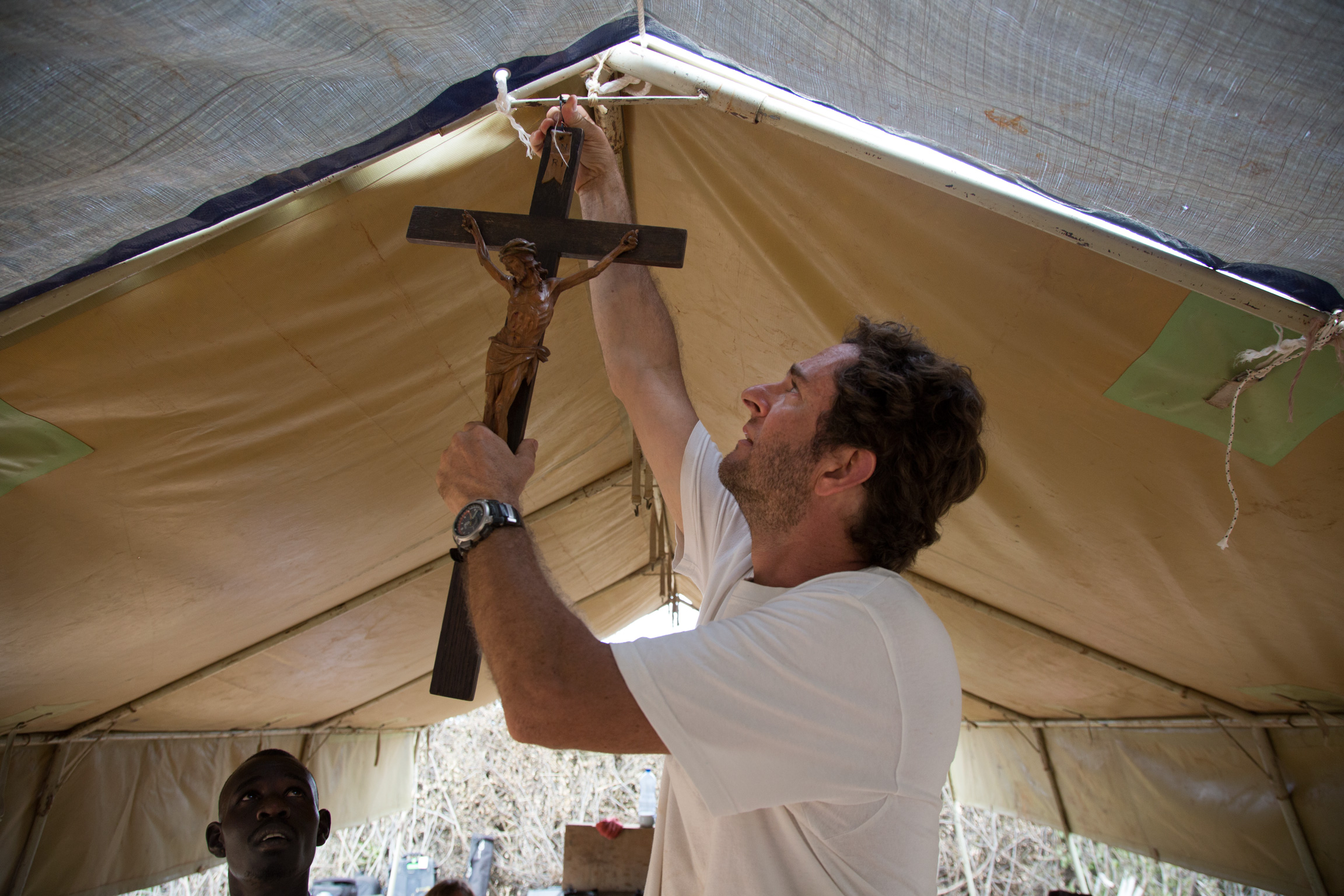
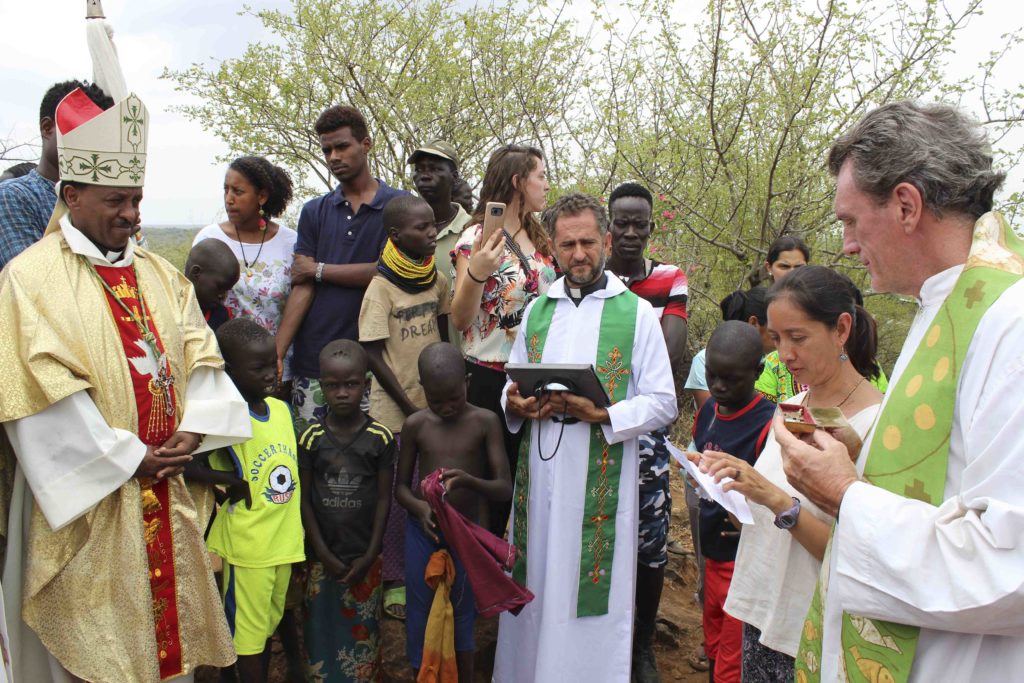
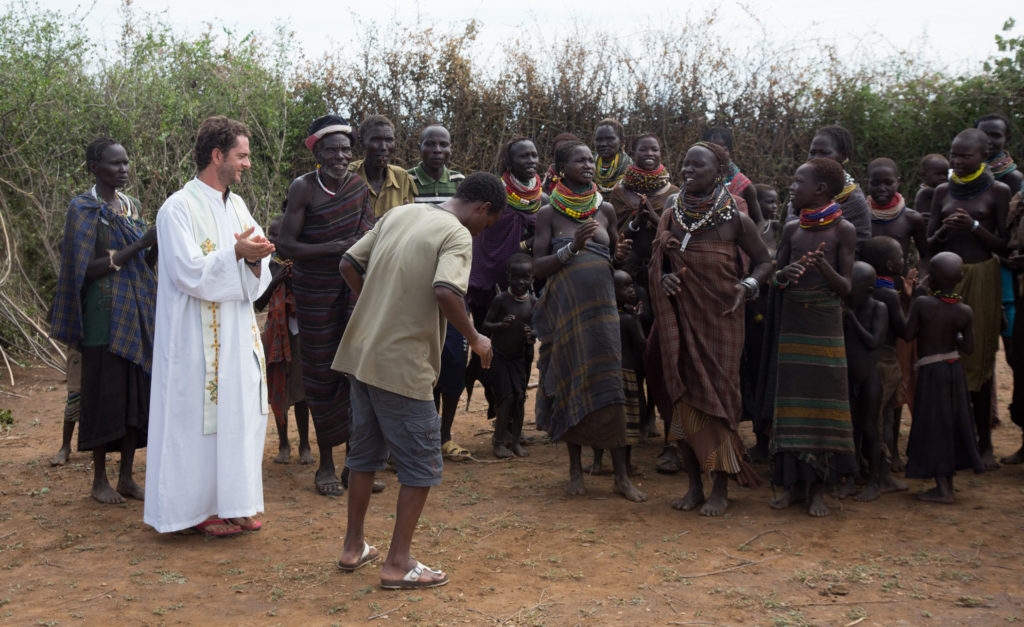
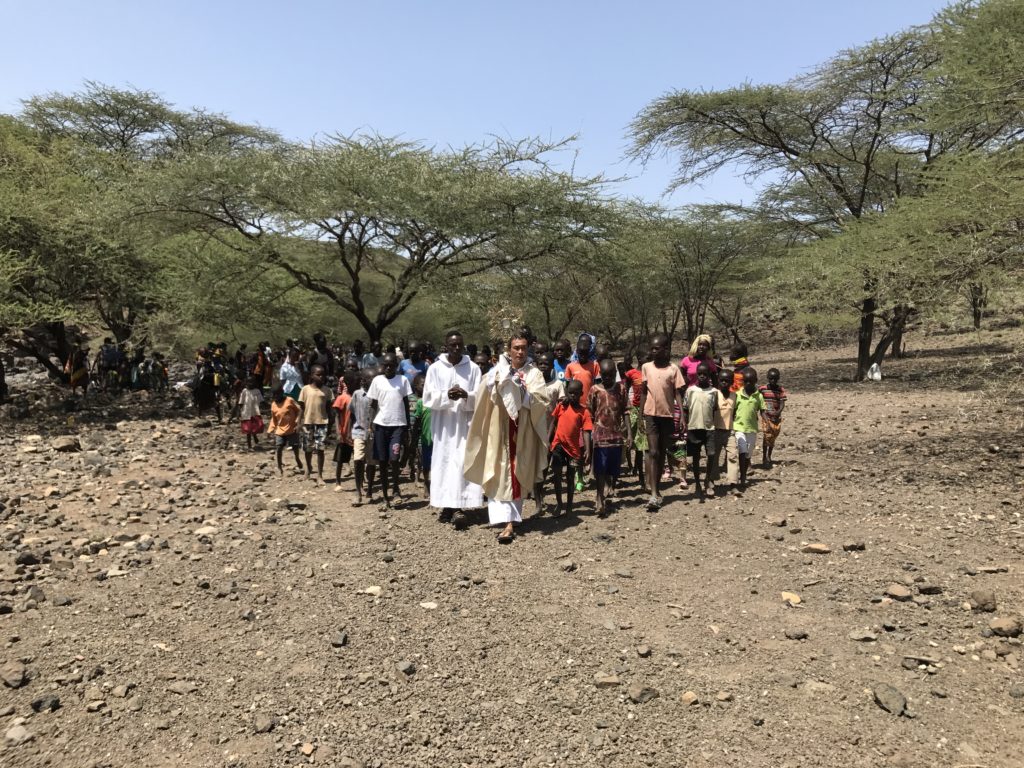
The endless horizon seemed to be ablaze with the fire from the sunset and the Naita Mountains appeared as a dark and remote silhouette. Wherever you looked, there were no obstacles to mark the view, the senses; we had the impression of being the only souls for many kilometres around. We were surrounded by nature in its purest form. Now in the diminishing light of the evening, we began preparing the camp in this remote but magical place, halfway between Nyangatom and Surma in Ethiopia. Before dinner, we celebrated the first Catholic mass in this corner of the world together with Rt. Rev. Dominic Kimengich, Bishop of the Diocese of Lodwar, where the Missionary Community of Saint Paul the Apostle (MCSPA) had been present for the last twenty-five years.
It was the first night of a long trip from Turkana (Kenya) to Ethiopia that would make history: never before had a Kenyan bishop visited another bishop in Ethiopia by land, at least not through these vast regions of south-western Ethiopia, where the Catholic Church has never been present. At mass, we prayed for Paco, who had passed away about two weeks earlier. We felt him very close as we were realizing his dream, a dream that he had passed on to us and with which we had fallen in love. It is the dream of building missions “from Turkana to Alexandria”, centres of life for the people around them, just as Nariokotome has been all these years.
Thanks to this dream of Paco, we have been embarked on this missionary adventure of founding a new mission among the Nyangatom that live in southwestern Ethiopia, for the last five years.
Who could have known that I would end up here! Nobody would have thought it possible as I come from El Prat de Llobregat, a village in the “red belt” of Barcelona, from a good though non-practising family, from an environment in which being Christian was almost a “sin” and being a priest was categorized as sheer “madness”.
That is how I got to know the people who, by fixing their gaze on me and believing that it was possible, were going to gradually change the course of my life: Lourdes, Paco and all my brothers and sisters from the MCSPA with which I now share my life and my dreams.
I met Lourdes when I was pursuing a certificate in multimedia. I loved photography and communication as means for capturing both the beauty of the world but also its cruelty and injustices.
It was a time of great changes in society, of demands for freedom such as the World Tour of Bruce Springsteen on Human Rights, the fall of the Berlin Wall, the freeing of Mandela and the end to apartheid. On one hand, I wanted to contribute to change the injustices of the world, but, on the other, I only dared to be “behind the camera”.
Due to my personality, I had always preferred to be a mere spectator in life, protected from the dangers that could come from the world. Getting to know the Community helped me start losing the fear of being “in front of the camera”, and to be the protagonist of my own story, of what was happening before me, becoming gradually more conscious of the fact that God was calling me to come out of my refuge and to seek my happiness by giving myself to others.
One of the most beautiful things I remember when I first met my new friends was the feeling of being able to trust them in the long run. I was not only able share from 8am to 2pm or over weekend drinks, but I could count on them for life … When we talked or discussed something, we would get to the very bottom of it and we could speak of our attitudes, of what we could change, and of improving ourselves, the world and the people around us.
I heard about Jesus of Nazareth for the first time in my life and it was to me an incredible discovery! Step by step, I started helping my new friends to take care of children from marginalized families.
Hearing them speak every now and again about Africa, about Turkana, talking, sharing and getting to know those that were coming and going to Africa, I slowly fell in love with these friends, their lifestyle, their constant fight to improve the life of those who were suffering wherever they were and so I answered their invitation to leave everything and follow Christ. During all these years, I learnt first to be a person, to see the needs of others before my own, to be compassionate, as others were many times more compassionate with me, to be constantly available for others what we call a “permanent flexibility”. This is a great treasure that we owe to Paco.
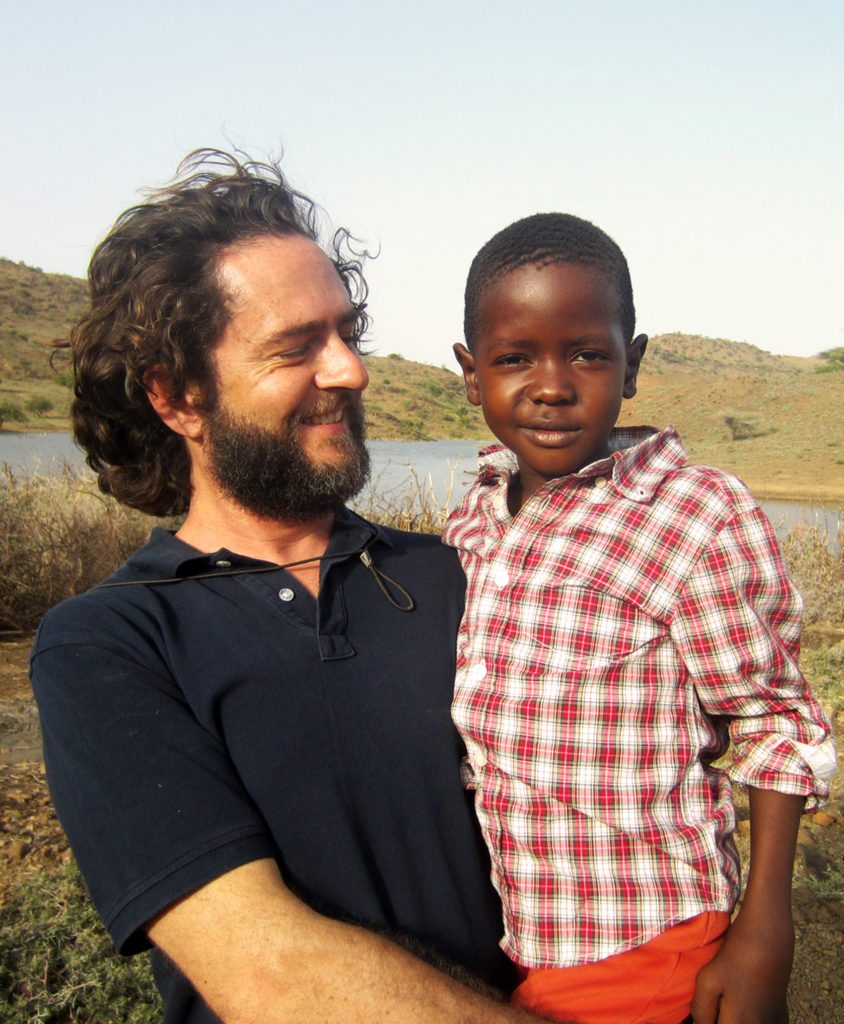
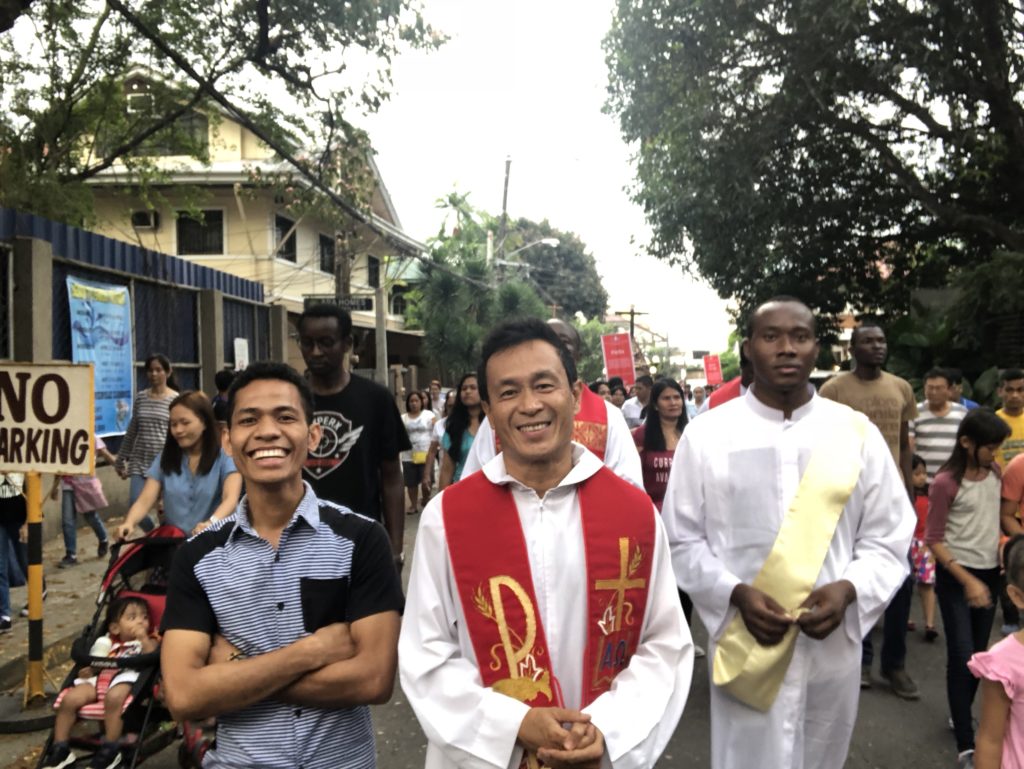
There were also dark moments which taught me to always look at tribulations, our limitations and even our human relations with a supernatural eye, looking far beyond them and accepting that everything has a profound meaning if only we were to transcend them and perceive in these things the hand of Jesus, of God. And then came the springtime, our priestly ordination sixteen years ago! Going out to the field, breathing in and savouring the gift of ordination. And soon after, marching into the arena to fight the bull; that is how we learnt that helping others was not so easy. With Albert, I began my floundering steps as a young priest; I learnt dedication to the faithful, to make homilies that entertained but stuck, to build dams, to deliver the hope and healing power of Jesus to the sick. All these, helped me to get closer to the Lord: taking care of the widow, the orphan and the foreigner. Especially, taking care of Gregory, (who had become an orphan and is now 20 years old). Pablo (who suffered from osteomyelitis in the femur and almost lost his life but, after years of battling it, is now healed and is 21years old), and little Joseph, (who is 13 years old and suffers from a severe juvenile rheumatoid arthritis).
Unknown to them, they have been the ones who have given me the chance of meeting with Jesus and of strengthening my faith, just as the Gospel tells us about the people who bore the stretcher for the paralytic so that Jesus could heal him (Lk 5: 17-26).
Some new challenges arose after that: working in Saint Augustine’s Cathedral in Lodwar, and there, together with our Emeritus Bishop Rt. Rev. Patrick Harrington, starting Radio Akicha (which means “light” in Turkana). This station was the first Catholic radio station in the whole of northern Kenya and is still functioning and trying to deliver “light” to the people of Lodwar and its surroundings.
Then I found myself returning once again to my dear parish at Lokitaung, before crossing the final frontier towards the new mission at Nyangatom, still trying to deliver real and specific Good News to those that have been forgotten by the globalized world and are enslaved by hunger, thirst, sickness and ignorance.
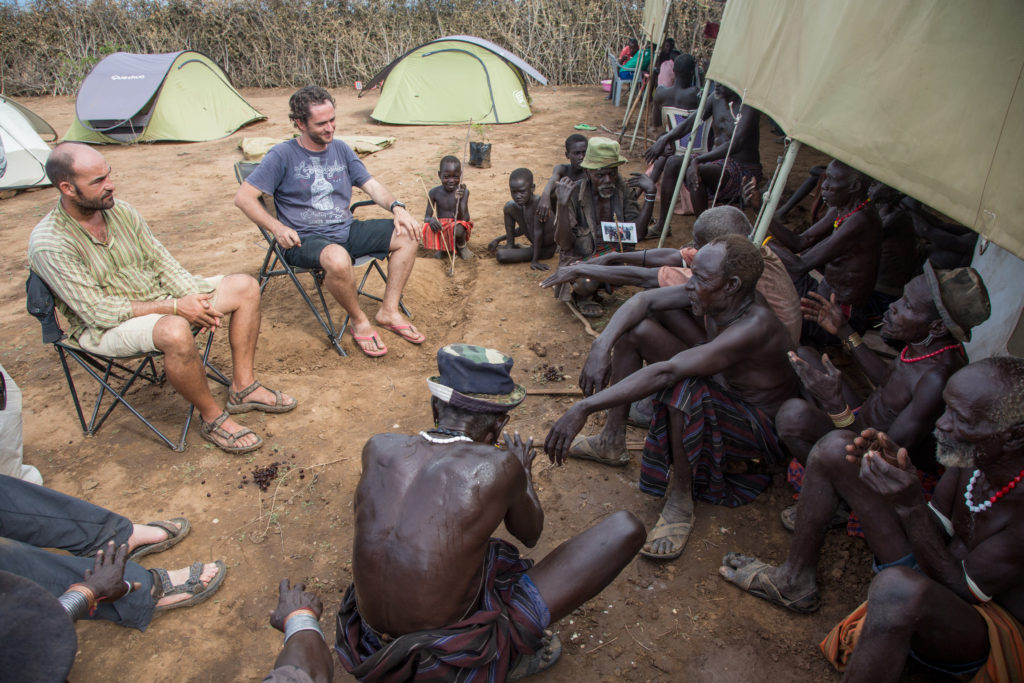
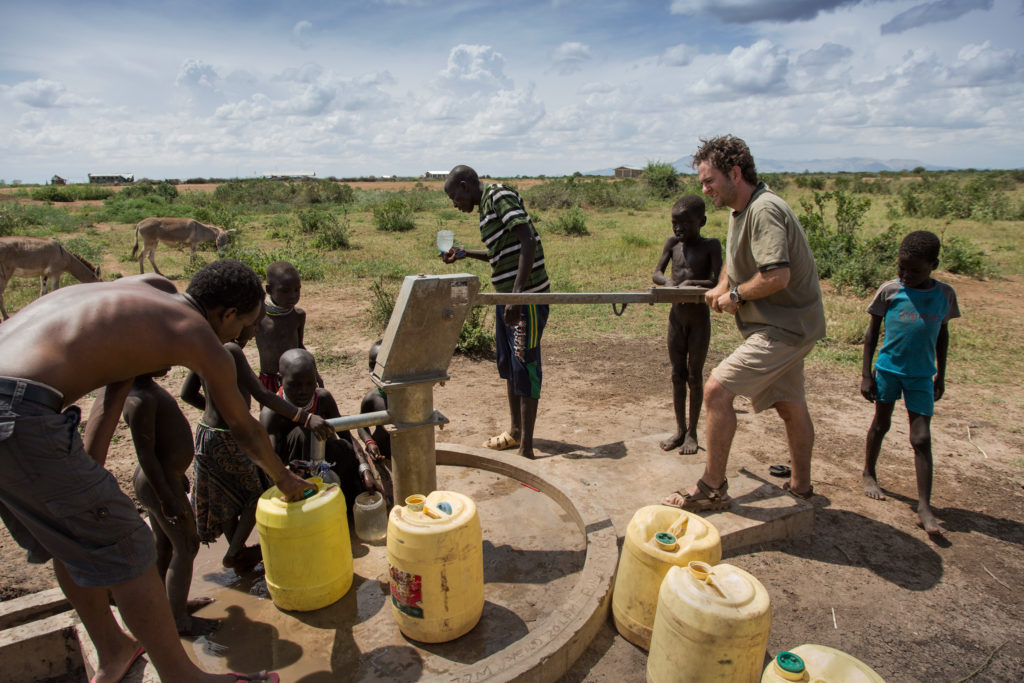
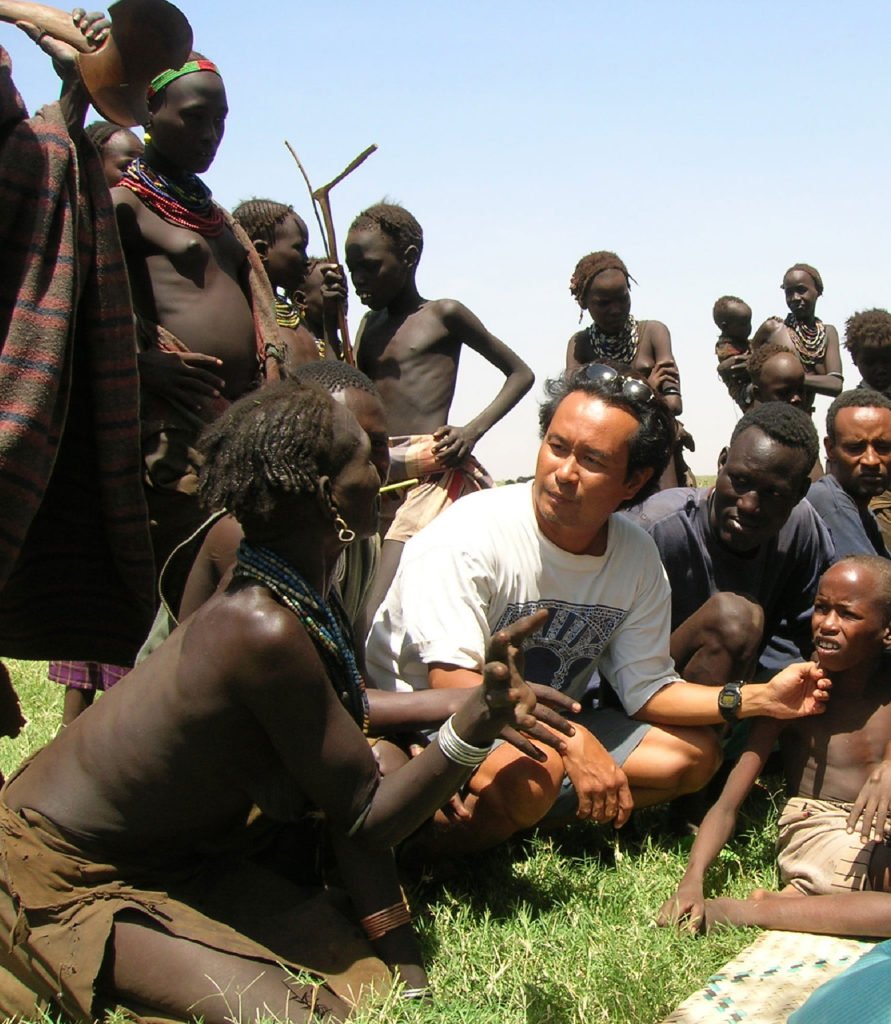
Then five years ago, my colleague Fr. David Escrich and I, left everything behind again and took a journey to the unknown. We arrived to Nyangatom with very few resources, and set up a mission camp in one of the remotest villages in Nyangatom, among the pastoralists. We concentrated our efforts in giving water to people, and so far we have drilled 13 boreholes in the area. We have also given assistance to many sick people who had no access to medical treatment. Five years down the line, we are now settled in the mission of Prince of Peace, a beautiful hill called Naturomoe, from where we wish to continue being a light for the people around.
29 October 2019 Posted by lillianNews
0 thoughts on “My Vocation Story: Fr. Francis Teo”
I left my parents’ home in Malaysia when I was 14 years in order to go to study in Singapore. I got a scholarship from the government of Singapore and I eagerly left to live on my own in another country. One might say that I tried to live intensely … wanting to do as many things as possible, to try out and experience all things possible, to fall in and out of love, to question my religious beliefs and to test my relationship with God.
After Hwa Chong Junior College (senior high school for A-Levels), which was – and still is – one of the more prestigious educational institutions in Singapore, like several of my fellow classmates, I went on to read law at the National University of Singapore (N.U.S.). Again, I lived life intensely in the positive and negative senses! It was the two years at NUS that I entered into spiritual and emotional turmoil. It was a time of “disenchantment” with everything. In my first year holidays, I travelled to Turkey and spent a great deal of time there and hitch-hiked across Europe – times were so different then – from Diyarbakir in Eastern Turkey to Dingle in Ireland. Then the second year, I went alone to trek in the North West Frontier Province of Pakistan. I was opened to the world and its peoples. I found it hard to return to a life enclosed by four walls. The routine and the mundane killed my spirit. I questioned many things that I had taken for granted all my life – relationships, goals in life, God. I longed for the freedom and open spaces. I felt a great and deep emptiness in my life, and yet I could not put my finger as to what exactly it was. It depressed me, and made me lose interest in my studies and in the prospects of a life as a lawyer. I was 21 years old.
Then came the great famine in East Africa with Ethiopia being especially hit. Bob Geldof was mobilizing food relief with “Feed The World”. Even at the N.U.S. we did our part to raise funds to send to Ethiopia. Some of us from Law Faculty actually danced at a concert! While it was good to be doing something for a cause, I felt that it was insufficient … I had to do something more. What hit me most was the famous photo of the emaciated child with a vulture standing nearby.
It was then that I decided that I would travel to Africa. That second year of Law School was especially turbulent for me. I had almost lost all interest in studies. Instead I became more and more interested in Africa. I would spend hours in the libraries of the university, looking up books on Africa – its geography, politics, history, anthropology etc. I read widely and took notes of the countries on the continent. And I began to plan for a trip there.
Naturally, when the final exams for 2ndYear came, I failed impressively. All my friends extended their condolences, and my parents were devastated. But I lost just one night’s sleep because the next day, I decided with all clarity of mind and unity of purpose, that I would leave the university and go to Africa to discover something … what, I still did not know!
Then the movie The Mission hit the screens, and this moved me even more to question what I was doing with my life. How could I be content with what I had around me without doing anything for the many who had less. After I happily dropped out of the university, I went to help at the camp for the Vietnamese “Boat People” at Sembawang that existed then. I found deep satisfaction in that.
I realised that I had to earn money to sustain me if I were ever to make it to Africa. My father would not support me financially for obvious reasons. I had to give private tuition for many hours each day to earn and save the money I needed. I began to work out a plan: I would spend two years travelling across Africa and enter Europe through Spain and end up in Belgium to study journalism. And along the way, I would work as a volunteer at a mission for some months. It all sounded fantastic!
A close friend of mine was studying at the Royal College of Surgeons in Ireland at the time. At my request, she sent me a list of 23 missions in Africa that had some kind of health facility. Little did I know then that there were thousands of missions all over Africa! I wrote to all 23 and I was sure that they would be so keen to welcome a young man from Singapore to volunteer work there … but no one replied except one. It was the Bishop of Lodwar Diocese in Turkana in Kenya. I looked up the Collins Atlas that I had at home and “Lodwar” didn’t appear on the map of East Africa, and I thought, “This must be the place!” I still have this first letter from Bishop John Mahon, and I treasure it. He invited me over to visit Lodwar and to work at a mission called Lowarengak Catholic Mission in the north of the diocese on the border with Ethiopia. With that, I gave away everything I had; the few things that I thought were absolutely dear to me, I stashed away in a carton box. Thirty two years later, that box is still in the store of my parent’s home …
My parents were concerned about me – where was I heading to, existentially and professionally? What future was I carving out from all this? They tried to advice and guide; they never pushed. They weren’t happy with my decision to leave the N.U.S. and go to Africa. There were so many reasons for objecting: a dismal prospect for the future; the dangers of traveling to and in Africa; all that wasted time etc. But when they saw that I was adamant, I think they realised that I needed the time to seek.
I bought a large map of Africa, framed it and hung it up on the wall at their home so that they would be able to follow my movement across Africa, so I figured. I left Malaysia and Singapore in 1987 and went Europe, then to Cairo and finally into Nairobi, the capital city of Kenya.
Throughout this initial part of the trip, I was alone but I never felt lonely. I missed my family but not my former life. I looked forward to the unknown in Africa with my whole heart and embraced each day and the surprises that it brought. I kept my parents updated about my movements. Phone calls were expensive. I had to write long letters and send it to them by snail mail! In those days, I could only receive mail from them by “post restante” at local post offices of cities where I passed by. My dad, I learnt many years later, looked forward to news from me, and he studied every word and every sentence carefully so as to glean a clearer picture of the circumstances that were shaping his son’s life. And my mother, I knew, kept praying for me throughout.
From Nairobi, I went up to the Turkana region about 1,000 km away to the north. Turkana land is a semi-desert into which I first entered hitching a ride on a lorry that was filled to the top with sacks of maize and beans. I was perched above those sacks together with a traditional Turkana man (dressed only with a blanket and a headgear with feathers) and his family – they were the first Turkanas I met. I still recall, as the lorry made its way across the yellow plains of Turkana dotted with scrub and thorn trees towards Lodwar town, the freedom and happiness in my heart because at last I was moving along in my dream to be in Africa.
I have never for a single moment regretted my decision to go to Africa, to chose a different path, to make that total change in my life. I could not and still cannot imagine how my life would have been if I had not dared take those steps.
When I reached Lodwar, I made my way to “the Diocese” which was the hill where the bishop lived and the diocesan offices were located. It was the center of much activity as the Church was a key player in the relief effort and development work in Turkana ever since the 1960s. Bishop John Mahon, an Irish missonary, was a pioneer missionary to Turkana. He was surprised to see me standing in front of his door that day in December of 1987 – never in his wildest dreams did he envisage a young man from Malaysia actually making his way there.
I was even more surprised at our first meeting: the good bishop was in shorts and boots, and constantly surrounded by children and workers. He was a canon lawyer by training and also a builder. All over Turkana, Bishop Mahon personally built schools, dispensaries, a hospital, churches, convents … In him, I learnt that Christ was to be found in the person, and not in all the laws and regulations and restrictions. We have so many of those in the Catholic Church that even a Pharisee would be proud!
Bishop Mahon’s favourite verse from Scripture was Luke 4, the part when Jesus reads quoting Isaiah: “The Spirit of the Lord is upon me, because he has anointed me to proclaim the good news to the poor. He has sent me to proclaim liberty to the captives and recovering of sight to the blind, to set at liberty those who are oppressed, to proclaim the year of the Lord’s favour.”
He did this literally: feeding the hungry, educating the downtrodden, giving work to those bowed down, building a hospital to cure the sick and a school for the blind … I learnt that the gospels were not just mere words! Action was needed too!
After our first meeting in Lodwar, in December 1987, Bishop Mahon asked me to go to the mission of Lowarengak in the north. There was no public transport there – these were extremely remote places then and still are to this day. So I got a lift on a diocesan lorry bringing relief food to Lowarengak village. There, I met for the first time a Spanish woman who turned out to be a nurse belonging to a group of missionaries from Spain. Cecilia Puig and other members of the lay community were very welcoming, and I felt at home with them instantly. It was my first contact with persons who would eventually become known as the Missionary Community of St. Paul the Apostle.
I accompanied them on their mobile clinics around and talked extensively about many things. Those conversations planted the seed of a vocation in me. A few months later, I met the priest who started this community, Fr. Francisco Andreo. People called him Fr. Paco or simply, Paco, as he prefered to be called.
Paco was never indifferent to the needs and suffering of others. He moved those around him to find solutions to situations of need that other persons were in, to solve problems. And Paco constantly called others to leave everything behind and to follow a life of service. And I was included in that invitation which he made so passionately and intensely such that I couldn’t say no! But it was an acceptance that matured and grew more profound with time. It was through Paco that I began to understand the gospels, life in a community and as a family. I began to get a glimpse of what being a priest and a missionary was all about, but this understanding had to be deepened and widened with time. I was 24 years old then and already I had been drawn into a life of caring for others – the children, the hungry, the sick, the elderly, the youth – and looking after them from head to toe.
And thus I began to live my life as a missionary with the Missionary Community of St. Paul the Apostle. Paco couldn’t stand to see a hungry child, and so all the day’s events and life in the mission was to see how there would be food – how to produce, to cultivate, to rear and grow … fruit, crops, animals. We needed water in that semi-arid land, and so we worked to drill boreholes, build dams … All this taught us to work to provide for the people who were thirsty and hungry. And thus our missions developed into centres of agricultural production, and water resource development.
Life was not easy, certainly. Conditions were harsh, back-breaking almost. Those were the early days when we were just establishing the missions, setting things up. Everything was a challenge … even making a phone call! But I took it all in and enjoyed life – the people, the work, the challenges, community life, the discovery of the gospels in relation to my daily life. It was like “a revelation to the Gentiles”!
I realised much later that my parents would object and oppose certain decisions of mine, but when they saw that I was certain of my decision, then they would relent. That I wanted to live in Africa already meant too many uncertainties for my parents, especially my late father. Now, their son wanted to be a priest IN AFRICA … goodness, that was too much!
I remember my father pleading with me, “Be a priest here!” But I argued that my roots were in Turkana; that I discovered my vocation there with this Community, in the milieu of the Turkana landscape and people, and under the Bishop of Lodwar. I could not cut off my roots and be transplanted elsewhere!
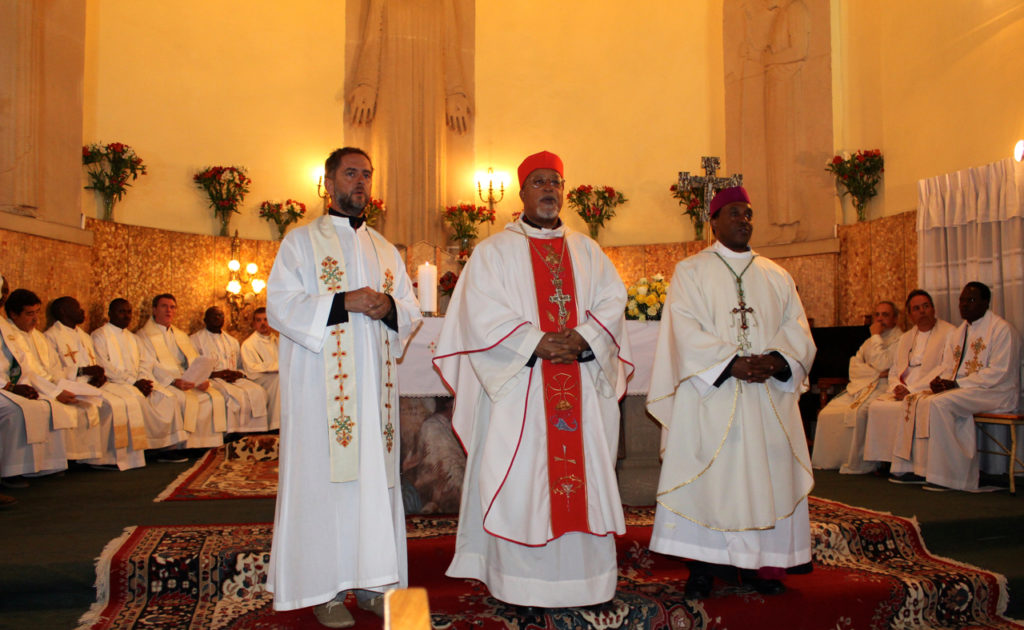
When I was ordained a priest, my dad was with a full-blown cancer of the bone, and my mother had to remain at home to look after him. They could not attend my ordination which was on August 15th, 1997, at Nairobi, Kenya. I was ordained together with Antonio and Manolo. A month before my dad passed away, my sister called me to say that his condition was worsening. But I still did not think it was necessary to return. However Paco insisted that I leave immediately and go to take care of my father. I did so and spent a couple of weeks in the hospital with my dad. One night, I noticed that he got out of bed slowly and with great difficulty and shuffled towards the mirror. He looked at himself in the mirror and then shuffled slowly back to the bed. I asked him if he was alright. But he ignored my question and delved into something more profound. Seated on the edge of the hospital bed, he said, “Son, if I had to live my life all over again, I would be a priest like you …” I was moved and tears welled up in my eyes. I muttered, “If you did so, then I wouldn’t exist”! And he went on to say that now that he was at the end of his life, he could look back and see that all that one has done has been in vain … except the good that one does. To me, that was a confirmation that my father was truly happy and accepted my decision to be a priest in Africa. When he died in August 1999, my father’s funeral was the first I ever officiated as a priest.
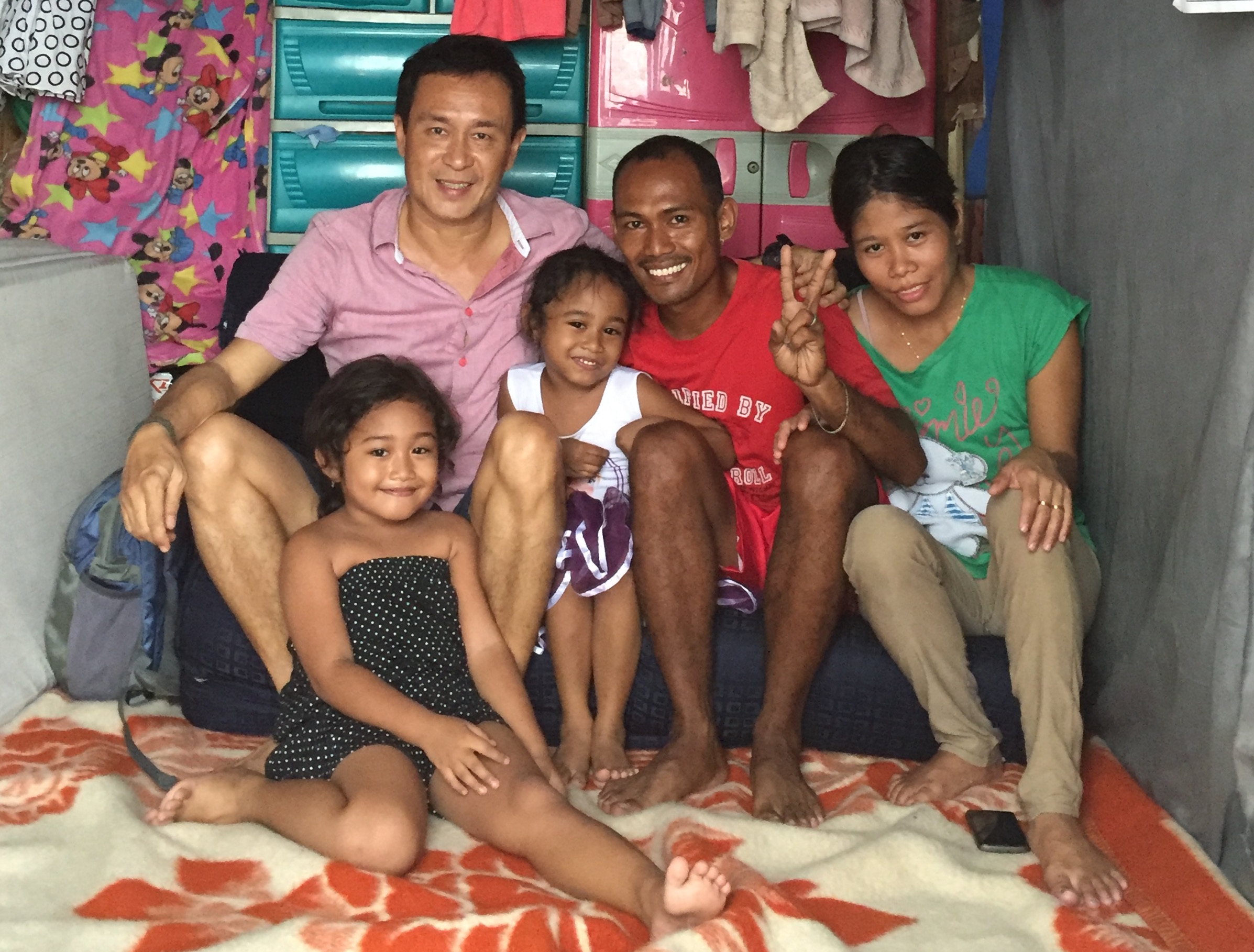
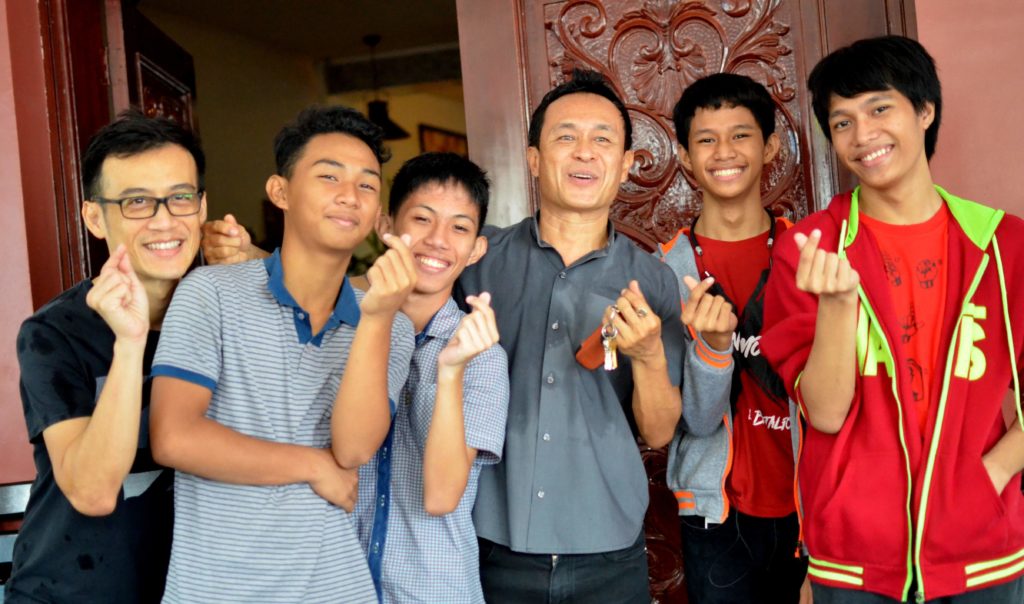
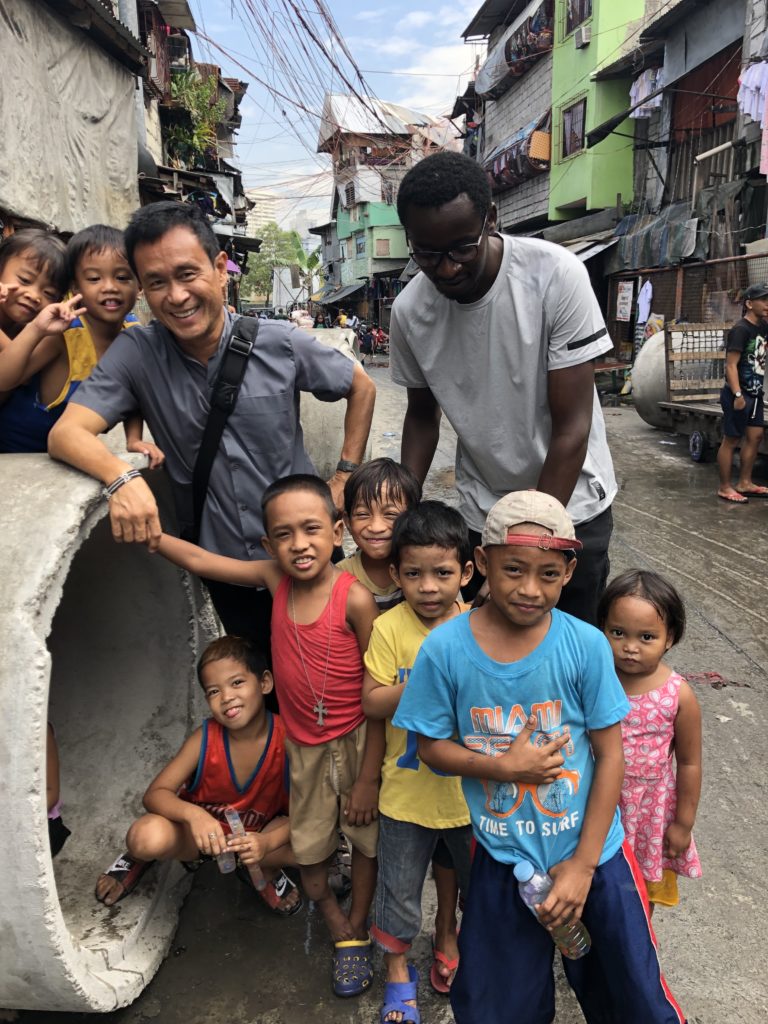
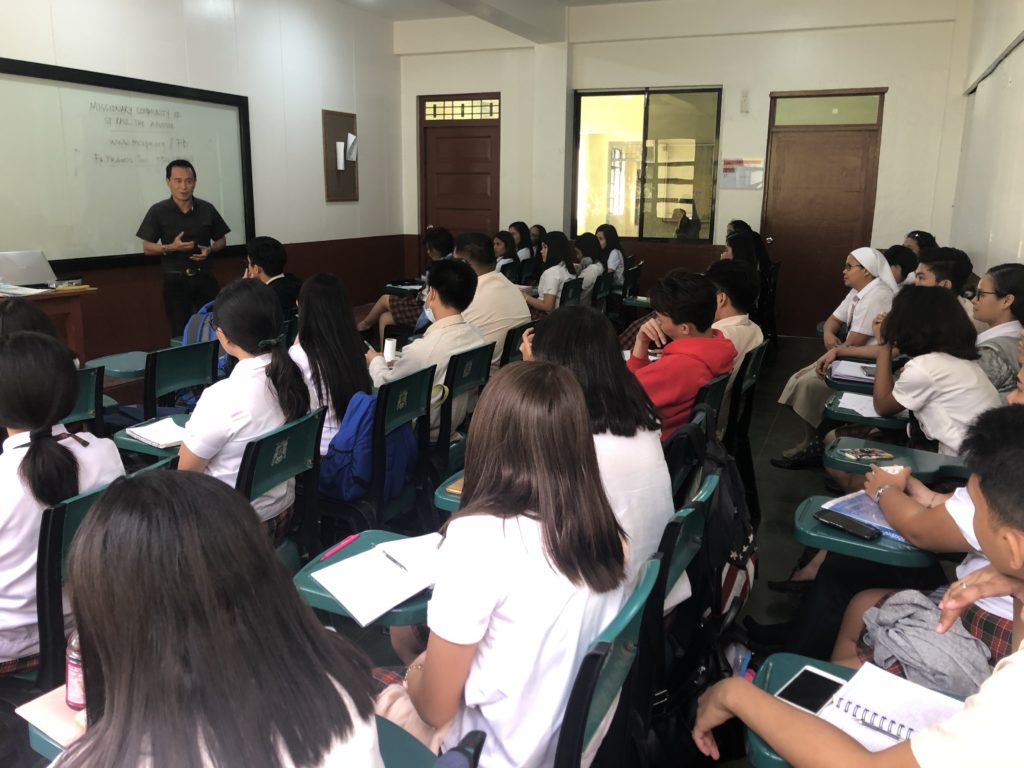
Since 2012, I have been in Manila, Philippines, where we have set up our formation house. We have our seminarians and priests studying there in preparation for work in Africa. As they follow their study programmes in philosophy and theology and other civil studies, they also help out with livelihood programmes at the Parola and Payatas slums, and with children and families from a nearby slum area.
I am very grateful to God for many, many things in my life. If I had to live it all over again, I would go through the same thing with the same people! If I love this life of mine, then I have to be grateful to my parents, who gave me life. I am thankful for this wider family that is the Missionary Community of St. Paul the Apostle that Paco began and which God placed before me. I am totally grateful for His gift of the priesthood to me – there has not been a single moment in these last 22 years as a priest when I regreted this important decision in my life. There have been difficult and trying moments, but never any doubt at all that this has been and is the way and the life for me. I thank God for the younger men and women whom I had invited to follow in this life as a missionary … Lillian, Brian, Ambrose, Timothy, Stephen and others; they have been a source of anxiety but also great joy in their journey of being formed into women and men to serve those on the fringe of society. I am thankful for the many persons and events that God placed in my path and which have helped mould me.
The greatest lesson which I have learnt from this life with the poor and marginalised, I think, must be the indomitable human spirit to survive, to improve and to push on despite all the odds. They teach me not to take life – and all that comes with it – for granted. It made – and continues to make – me question why some people have it all and others nothing at all. What is clear also is the amount of good that can be achieved when there is goodwill and hardwork, when each of us brings his or her 5 loaves and 2 fish. And there is no doubt about the deep and existential joy that we find in doing good for others.
We use cookies on our website to give you the most relevant experience by remembering your preferences and repeat visits. By clicking “Accept All”, you consent to the use of ALL the cookies. However, you may visit "Cookie Settings" to provide a controlled consent.
This website uses cookies to improve your experience while you navigate through the website. Out of these, the cookies that are categorized as necessary are stored on your browser as they are essential for the working of basic functionalities of the website. We also use third-party cookies that help us analyze and understand how you use this website. These cookies will be stored in your browser only with your consent. You also have the option to opt-out of these cookies. But opting out of some of these cookies may affect your browsing experience.
Necessary cookies are absolutely essential for the website to function properly. These cookies ensure basic functionalities and security features of the website, anonymously.
Cookie
Duration
Description
cookielawinfo-checkbox-advertisement
1 year
Set by the GDPR Cookie Consent plugin, this cookie is used to record the user consent for the cookies in the "Advertisement" category .
cookielawinfo-checkbox-analytics
1 year
Set by the GDPR Cookie Consent plugin, this cookie is used to record the user consent for the cookies in the "Analytics" category .
cookielawinfo-checkbox-functional
1 year
The cookie is set by the GDPR Cookie Consent plugin to record the user consent for the cookies in the category "Functional".
cookielawinfo-checkbox-necessary
1 year
Set by the GDPR Cookie Consent plugin, this cookie is used to record the user consent for the cookies in the "Necessary" category .
cookielawinfo-checkbox-others
1 year
Set by the GDPR Cookie Consent plugin, this cookie is used to store the user consent for cookies in the category "Others".
cookielawinfo-checkbox-performance
1 year
Set by the GDPR Cookie Consent plugin, this cookie is used to store the user consent for cookies in the category "Performance".
CookieLawInfoConsent
1 year
Records the default button state of the corresponding category & the status of CCPA. It works only in coordination with the primary cookie.
Advertisement cookies are used to provide visitors with relevant ads and marketing campaigns. These cookies track visitors across websites and collect information to provide customized ads.
Cookie
Duration
Description
VISITOR_INFO1_LIVE
5 months 27 days
A cookie set by YouTube to measure bandwidth that determines whether the user gets the new or old player interface.
YSC
session
YSC cookie is set by Youtube and is used to track the views of embedded videos on Youtube pages.
Analytical cookies are used to understand how visitors interact with the website. These cookies help provide information on metrics the number of visitors, bounce rate, traffic source, etc.
Cookie
Duration
Description
CONSENT
2 years
YouTube sets this cookie via embedded youtube-videos and registers anonymous statistical data.
Functional cookies help to perform certain functionalities like sharing the content of the website on social media platforms, collect feedbacks, and other third-party features.
Performance cookies are used to understand and analyze the key performance indexes of the website which helps in delivering a better user experience for the visitors.