Daily Archives: October 27th, 2019

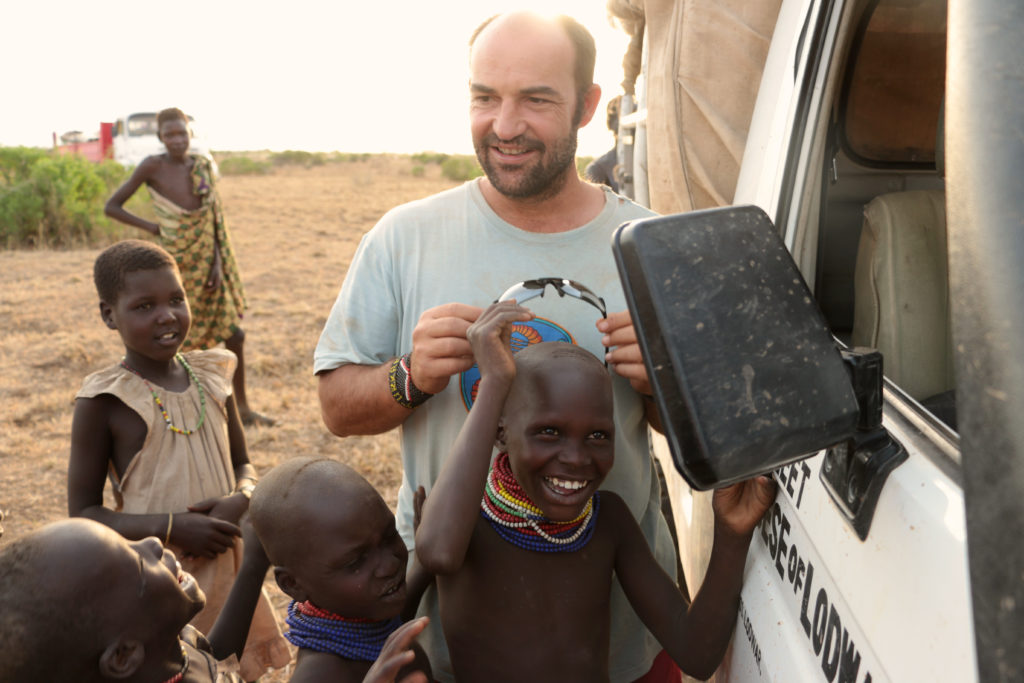
Apprentice in Love : David Escrich

27 October 2019 Posted by News 0 thoughts on “Apprentice in Love : David Escrich”

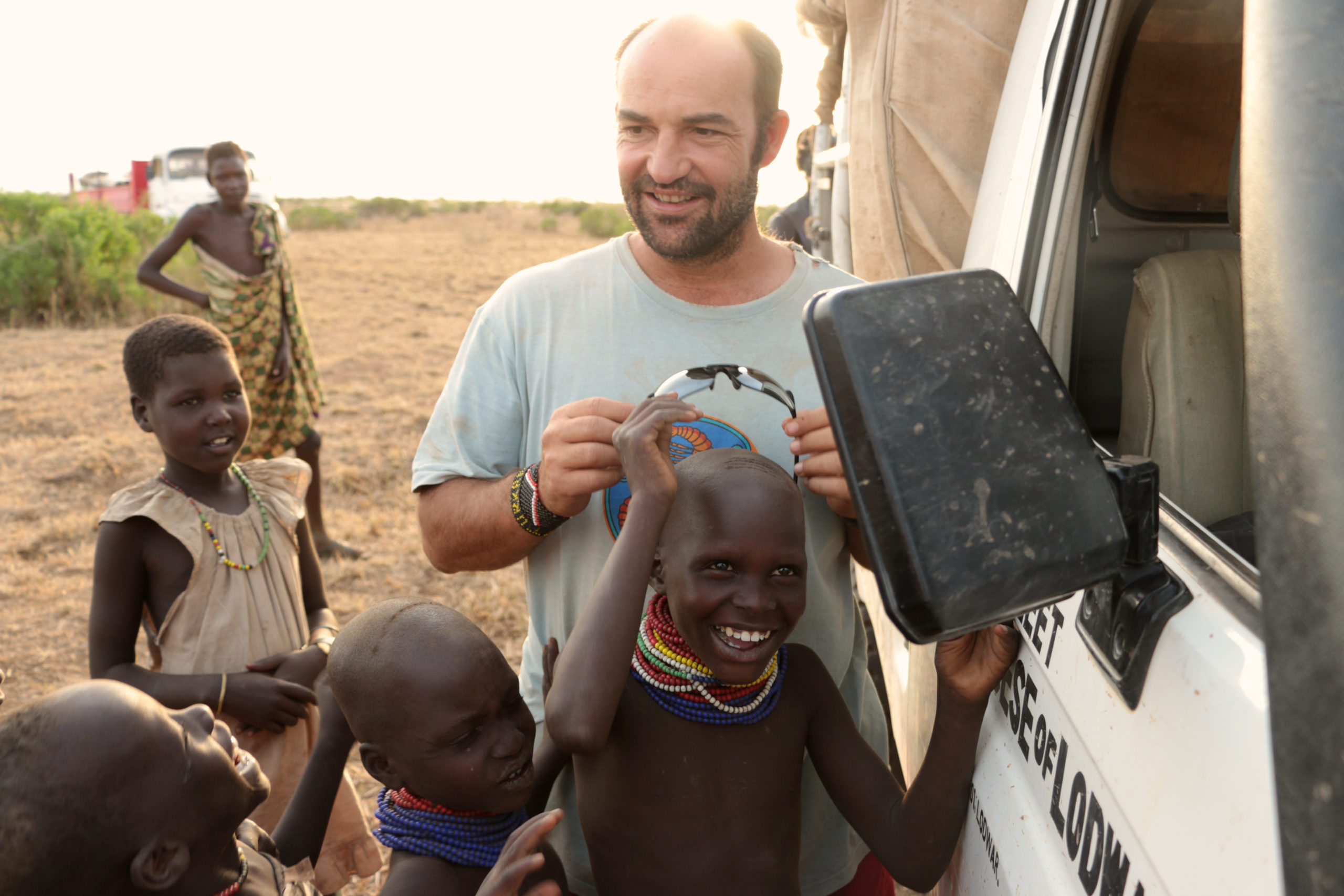
For twenty five years, my life has been linked to this community; twenty two of them in Africa, and the last thirteen years as a priest. It is not easy for me to look back and to try to summarize my vocational journey in a few lines. I cannot say that I was a very religious person at first. I “discovered” God gradually, through the evidences, through an endless symphony of people, events, challenges, joys and defeats, which, I would say, were orchestrated by God Himself. 

I come from a humble family that migrated to Barcelona in search of work. When I was around sixteen or seventeen years old, I went through a phase of disenchantment with what society had to offer. I used to dream, in the rainy autumn evenings about changing the world with my songs. It was not that I had many songs or that I was any good at music, but it was more an aspiration than a fact! I suppose that almost everyone experiences something of the sort at that age, but at the end of it all, crude reality always ends up imposing itself. Before we realise it, we are swept away by a flash flood of events indispensable for our survival: studies, finding – and keeping – a job agreed, the almost-compulsory relationships, getting a car and a house, starting a family, making friends … The beast ends up drowned in the troubled waters of social responsibilities, taking with it all those chimeras; they are left aside on the background, forgotten in the drawer of those pleasant and naïve teenaged dreams. I was lucky to meet certain people like Angel, Lourdes, Paco and others who offered me a saving hand and took me out of those raging waters, opening the gate of a new world where I did not have to exchange my dreams for a plate of lentils. God erupted in my life and offered me a real way of materializing my utopic unquietness.
The first thing that attracted me was the life in common; I liked it so much that I decided to remain. In Western societies, friendship has been relegated to a secondary role, below that of couples. It is not easy for us to accept as valid any type of love, outside the context of family that is not sexual. Learning to live friendship as a complete way of loving helped me rediscover the words and actions of Jesus, which then became alive and full of sense to me.
The Gospel became a reality and an interactive map for my daily life: “… And he will put the sheep at his right hand and the goats at the left. Then the king will say to those at his right hand, ‘Come, you that are blessed by my Father, inherit the kingdom prepared for you from the foundation of the world; for I was hungry and you gave me food, I was thirsty and you gave me something to drink, I was a stranger and you welcomed me, I was naked and you gave me clothing, I was sick and you took care of me, I was in prison and you visited me.’ … And the king will answer them, ‘Truly I tell you, just as you did it to one of the least of these who are members of my family, you did it to me.’” (Mt 25:31-46). The next logical step was to put into practise what I had read from the Gospel and to not be indifferent to the sufferings of others. This was what pushed me to go to the missions in Kenya to help. During the years that I was in Kenya, God erupted in my life and offered me a real way of materializing my utopic unquietness. 

The love, charity, compassion and generosity towards the suffering, brought me to discover Christ and my vocation in following Him – to be a “sheep”.
All this may sound too idealistic, but it is not. In the words of Leonard Cohen, “Love is not a victory march; it is a cold and broken halleluiah”. It is not easy to go out of ourselves and set the needs of others before ours; to abandon comfort zones, routines, plans and securities that one tends to create and to put everything at the service of an unknown person who comes to your door. This is a difficult task. It is usually a disturbing, burdensome, cumbersome and costly task. It does not flow out automatically from us, we need some- body to help, correct and admonish us. Thanks to people like Paco, I experienced that often we are the ones who put limits to reality, and that what we think as impossible is in reality possible; that God is a factor we need to take into ac- count. We fear dying to ourselves and sacrificing for others. Each sacrifice is a small death on the cross and that scares us. But even though it may look like a contradiction, after the cross there is life. It is precisely when you lose yourself to make others happy, that you find true happiness; you experience the resurrection (cf Mt 16:24-26). 

It was through Paco that I discovered my priestly vocation; that the Eucharist is nothing other than the celebration of the fact that Jesus sacrificed His life for us, that He gave us all that He had, His flesh and blood to feed, cure and free us. At the same time, the Eucharist is an invitation to imitate; it is the sacrament of love, charity, generosity and compassion. It is a sacrifice of giving food to the hungry, water to the thirsty, clothes to the naked, hospitality to the stranger, visit to the sick and the prisoners, opening the eyes of the blind, among other noble works of mercy. The Eucharist means going through, in our daily lives, the cross and the resurrection of Christ. 

I am still on this long journey of apprenticeship in love. It is a never-ending journey where every stretch is different, unpredictable, and never stops surprising me. If I had to choose a text that could define all this, then I would take one from our patron, Saint Paul the Apostle:
“If I have the eloquence of men or of angels, but speak without love, I am simply a gong booming or a cymbal clashing. If I have the gift of prophesy, understanding all the mysteries the- re are, and knowing everything, and if I have faith in all its full- ness, to move mountains, but without love, then I am nothing at all. If I give away all that I possess, piece by piece, and if I even let them take my body to burn it, but I am without love, it will do me no good whatever … In short, there are three things that last: faith, hope and love; and the greatest of these is love.” (1Cor 13:1-13).

Fr. David Escrich, MCSPA 
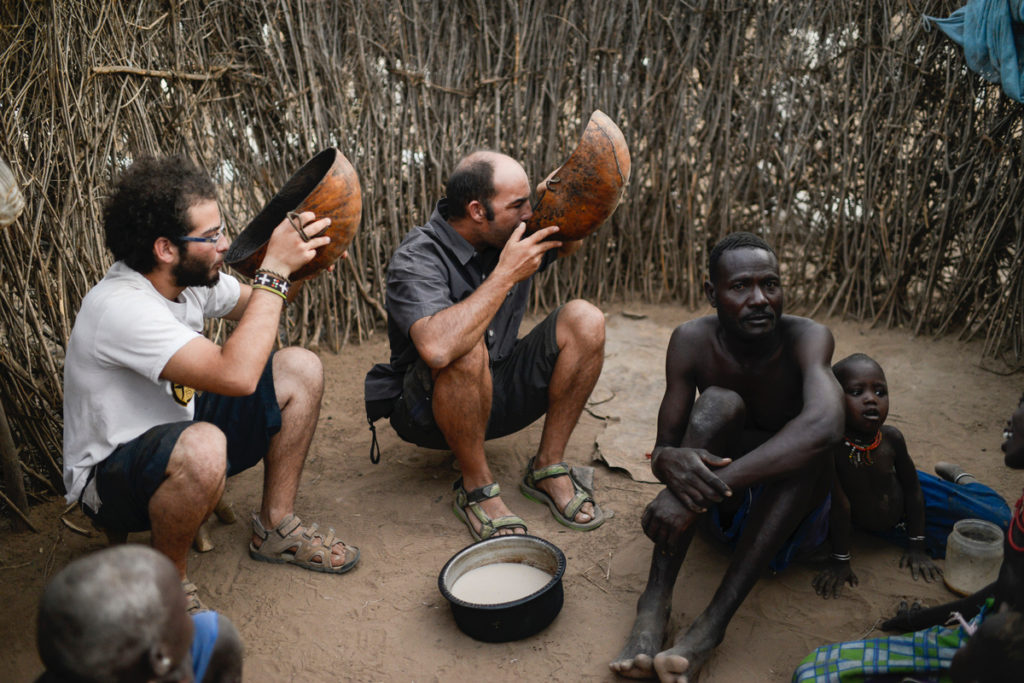
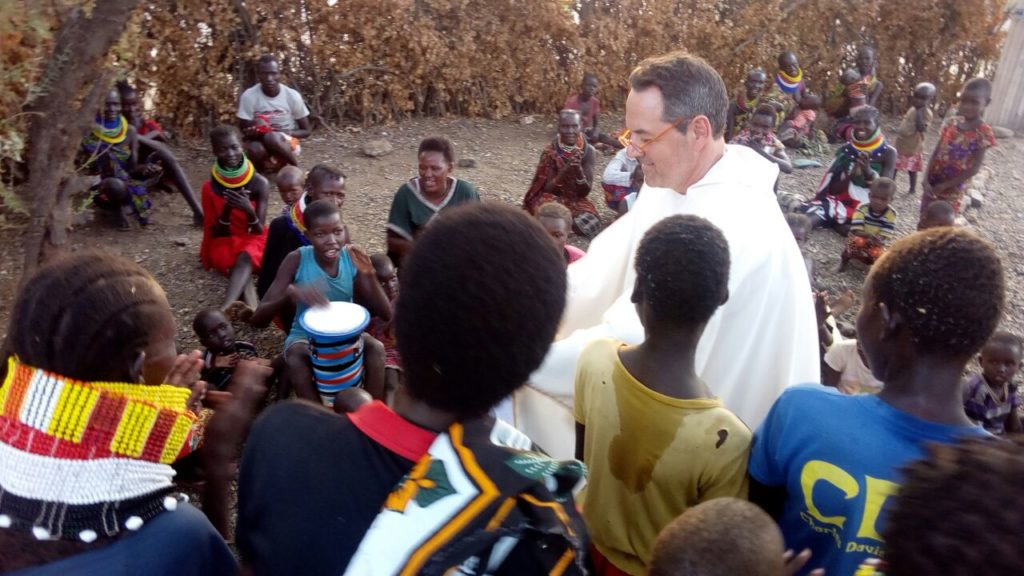
ETHIOPIA, Southern Nations, Lower Omo valley, Kangaten, village Kakuta, Nyangatom tribe, missonaries of St. Paul, Nyangatom catholic mission / AETHIOPIEN, Omo Tal, Kangaten, Dorf Kakuta, Nyangatom Volk, St. Paul Missionare, David Escrich Perez

The Year of Grace: Fr. Alejandro José Campon (Fr. Alex)

27 October 2019 Posted by News 0 thoughts on “The Year of Grace: Fr. Alejandro José Campon (Fr. Alex)”

More than 23 years ago, when our magazine In Itinere began its first publication, I wrote an article in this same section and gave an account of the feelings and thoughts that were in me when I had then recently received the grace of priestly ordination. “The Year of Grace”. Re-reading it recently, I asked myself whether this novelty that I had in me when I received my priestly ordination is still as alive and strong today. That joy of being a priest, which over flowed when I wrote my earlier article, was it still the crux of my life? 

This year, 2019, I celebrate 23 years in the priesthood: 23 years of joy, 23 years of grace.

It is a complicated question and I should be honest with you and more so with myself. I could get by with some superficial and sweetened eulogy or praise at becoming a priest; I have heard much of this especially during the past Year for Priests recently closed by Pope Benedict XVI. I could also be caught up in a pessimistic and gloomy analysis, with neither hope nor future, precisely in a year in which the priestly order is being questioned and the value of a priest in the western world is being undermined. 

Let me start with this conclusion: Yes, 23 years of joy and grace! I think I am being honest when I say so and not because I am forced to say so or because it is theright thing to say. Had they not been years of joy and a feeling of grace inmy life, I would have made some excuse not to writethis article! By saying so, I mean that this is the honest and concise answer that arises in me in response to this question. 

Happiness has a complex meaning although we use it banally and with a poor philosophical base. In short, I think the problem lies on where in our lives do we place the experiences of pain, suffering and of our human limitations in a limitless universe. That is why we are unhappy. In most cases, we are unable to internally transform our sufferings into moments of joy in our pilgrimage of God’s plan for us. And here is my poor summary that gives meaning when I say that I am happy. 

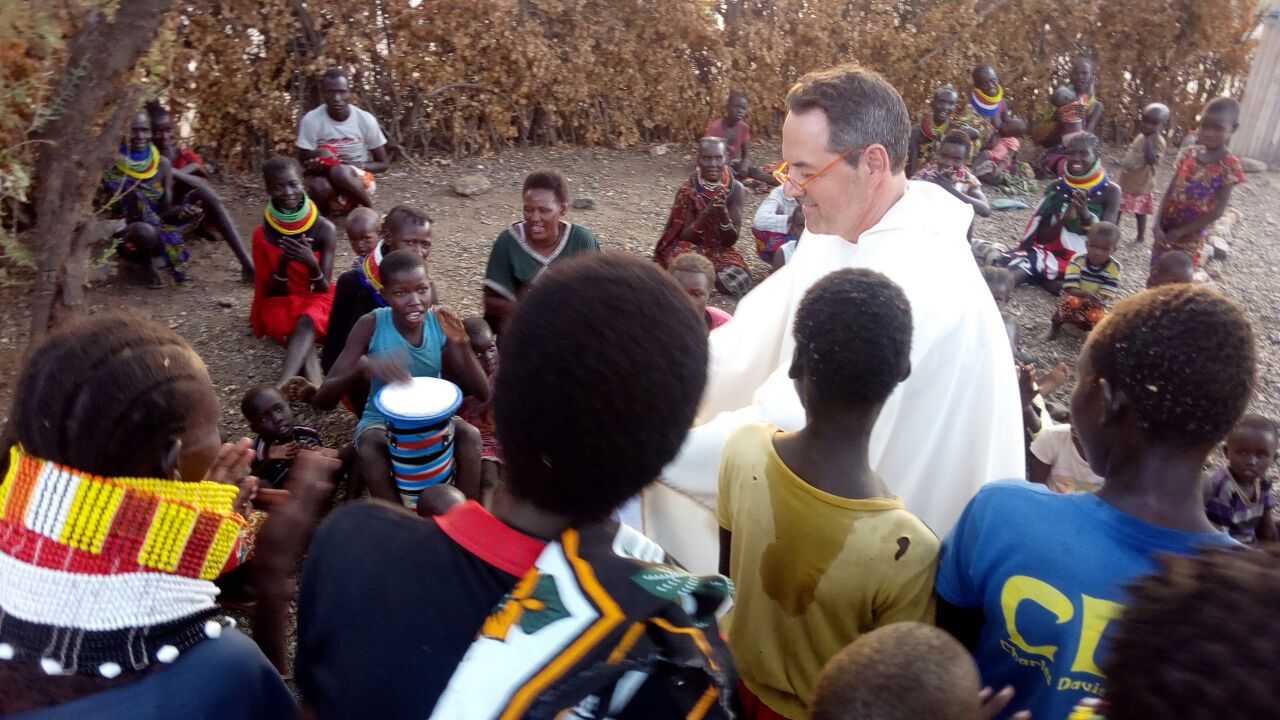
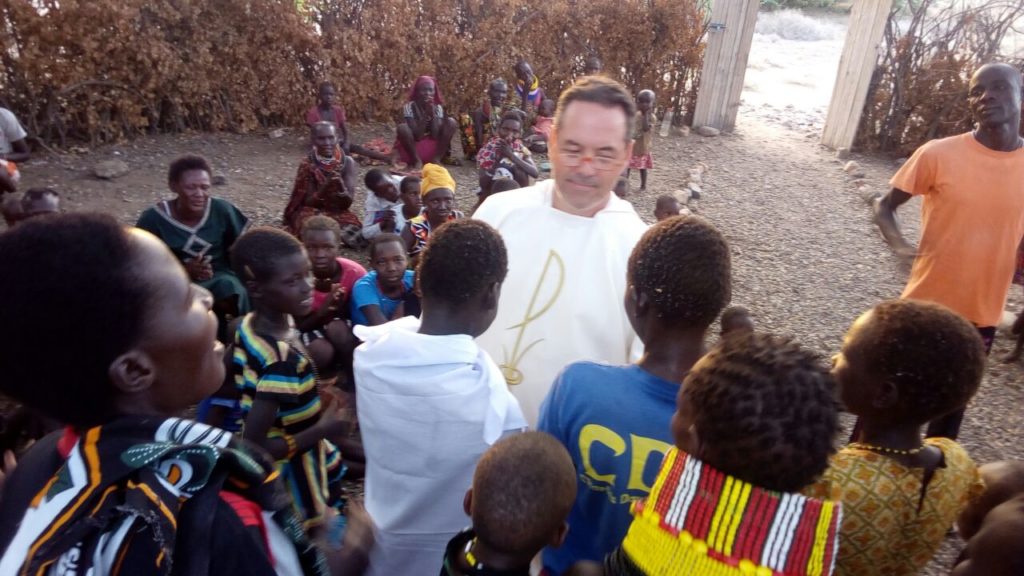
In these 23 years, I have gone through times of happiness as well as harsh experiences of pain and suffering. The day to day life of a missionary priest, in remote lands and at the first line of evangelization such as where I am currently in the northern part of Turkana, filled with life’s constant challenges: hunger, diseases, violence, ignorance… It is tough and it toughens one up as well. However one can find happiness in seeing that one’s little contribution could help to alleviate somewhat all this pain and this gives a double joy and softens one’s heart. Believe me, it is one of sublime happiness to see a hungry child eating; or to catch the contented smile of a woman who no longer needs to walk a long distance because she now has the water source nearby; or to detect the vital energy of the youth who feels useful because of work and not condemned to live in a spiral of violence; or to catch a glimpse of the look of an elderly lady when her face lights up at your visit, or the jubilation of a community that lives and dances the hope of their renewed faith … 

Other painful experiences come as a result of losing or being separated from our loved ones. Unfortunately, I have had these experiences as well and they call for a great effort not only rationally but above all emotionally. 

Trying to build happiness on what is absent is tough, but one overcomes this with the hope placed on new dreams, in seeing that Christ still knocks on the doors of many who are willing to follow him and in the joy of seeing that God’s plan is immense and definitely happy are those who have lived and experimented it until now. 

In the 23 years there have been times of crises and feeling low. I do not believe in those who say that they have never undergone an existential or a vocational crisis. Every change in the rhythm of life, each apparent created security; every pride or falsely acquired right may shake, at one time or another, our vocation. But it is like a disease plaguing a child: every flu or malaria makes the child grow some centimetres taller. Every fall, confronted by love, is an elevation in our pilgrimage; every crisis, an opportunity to better ourselves and of humbly accepting that He, who is almighty, demands but always sustains us. 

It has been 23 years of living at various missions, in different realities, and on two continents, and finally returning to Africa, to Turkana. It has been 23 years of trying to give all to the call received, and to extend this call to others with some success and without chaos. It is also of wanting to serve others and of seeing that Christ is in the lives of those who surround me. Now, more than tired, I am hopeful and strengthened by these past years, which make me stronger and more trusting that the love of Christ will penetrate the hearts of all those whom God sends to me.

Fr. Alejandro José Campón 

Ordination to the Diaconate of Victor Otieno

27 October 2019 Posted by Community, News 0 thoughts on “Ordination to the Diaconate of Victor Otieno”

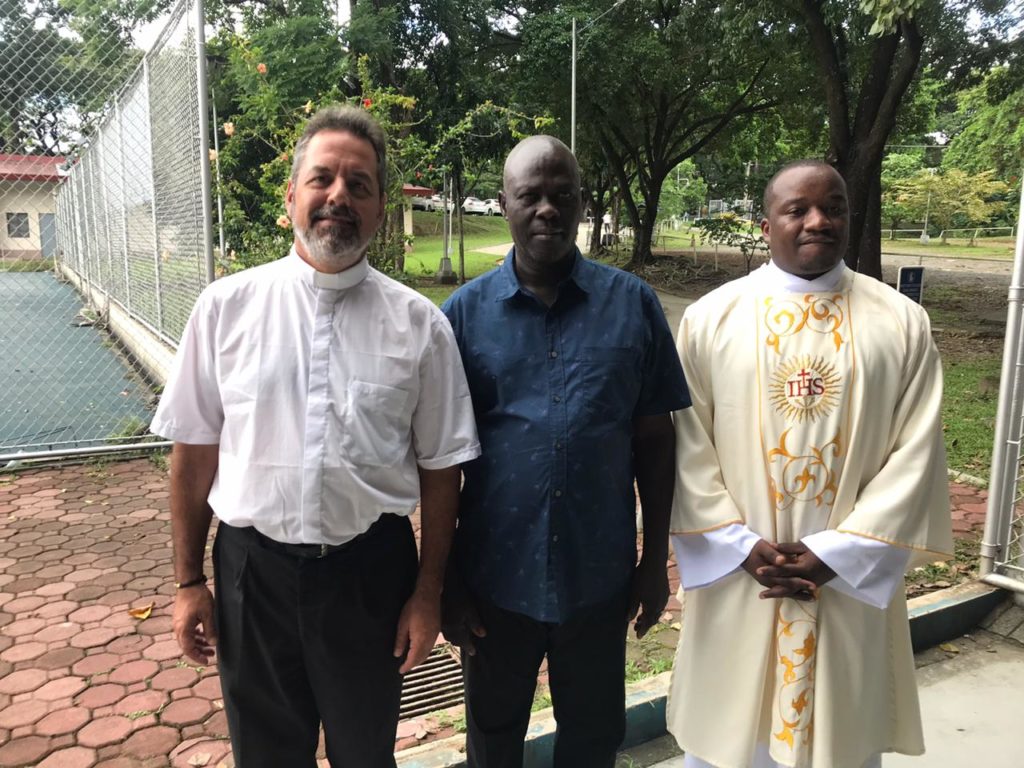
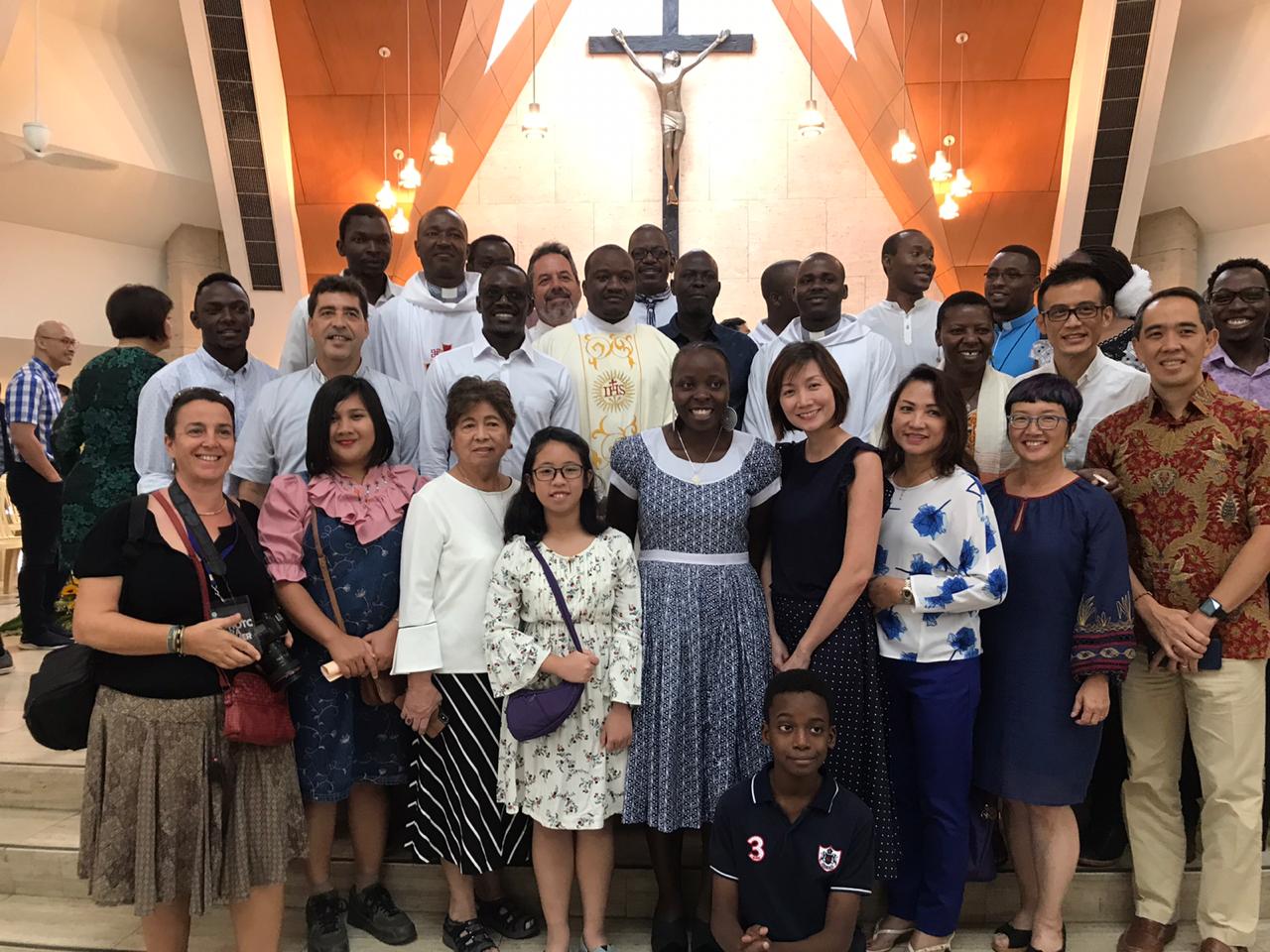
This morning of the 26th of October, in the stunning Church of the Gesu at Ateneo de Manila University (Philippines), our brother Victor Otieno Owino was ordained to the order of deacon for the Diocese of Lodwar. Victor is a member of the MCSPA and has been pursuing his Theological studies at Loyola School of Theology which is affiliated to the Society of Jesus while continuing to receive his formation at the MCSPA’s St Joseph and St Francis Xavier Formation House in Cubao.

The ordaining prelate was the Most Rev. Sofronio Bancud of the Diocese of Cabanatuan (Philippines). Victor was ordained together with 8 other candidates from the Society of Jesus. In his homily, the bishop expounded on the roles of the deacon in the life of the Church.

There were representatives of the MCSPA as well as family and friends from Kenya, Malaysia, Spain, Singapore and the Philippines. For the MCSPA, it is the first time that we have had an ordination to the diaconate of one of our members from the community in the Philippines.

We thank all who have accompanied Victor in this journey for their unfailing support for him and the fledgling MCSPA Community here in Manila.

Brian Werunga, MCSPA

Social networks

Categories

Calendar

October 2019
M T W T F S S
 123456
78910111213
14151617181920
21222324252627
28293031  
MCSPA